FIFA 2026 Airbnb Host Guide: Monterrey
Four matches at Estadio BBVA — three group-stage games and a Round of 32. The steepest match-day price premiums of the entire tournament. The lightest short-term-rental regulation of any Mexican host city. The closest Mexican host city to the US border, two to three hours from Texas. And a stadium in Guadalupe, not Monterrey proper. Here's what hosts across the metro area need to know.
Monterrey is Mexico's industrial powerhouse, and for FIFA 2026 it carries a four-match slate at Estadio BBVA — the steel-clad venue Monterrey fans call El Gigante de Acero, “the Steel Giant,” operating under the FIFA tournament name Estadio Monterrey. Unlike Guadalajara, Monterrey's schedule includes a knockout fixture: three group-stage matches plus a Round of 32 on June 29.
For hosts, the pricing signal is the headline. AirROI's tournament dataset identified Monterrey as having the steepest match-day price premiums of any host city in the entire tournament — the June 14 Sweden vs. Tunisia fixture showed a roughly +387% match-day premium versus the same day of the week in 2025, the single highest in the dataset, with the city's other match days close behind. Premiums concentrate where supply is thinnest, and Monterrey is one of the thinnest-supply markets in the tournament.
Two things make Monterrey distinctive among Mexico's host cities. First, regulation is the lightest-touch of the three — there is no nights-per-year cap, no statewide STR law, and the main local rule is a single municipal lodging tax. Second, Monterrey is the closest Mexican host city to the United States — the Texas border is roughly a two-to-three-hour drive, which makes the metro area a natural crossover market for fans coming from Houston, Dallas, and San Antonio.
This guide covers the four-match schedule, the Monterrey-versus-Guadalupe municipal question, the light regulatory regime, the pricing opportunity, Metrorrey access to Estadio BBVA, the Fan Festival at Parque Fundidora, and the neighborhoods that perform best for international guests.
A note on audience and currency: This guide is written for hosts operating short-term rentals across the Monterrey metropolitan area — including the City of Monterrey, Guadalupe, San Pedro Garza García, San Nicolás, and neighboring municipalities — under City, State of Nuevo León, and Mexican federal rules. It is also useful for US and international hosts who own property in the metro area. Peso figures are marked MXN; US dollar equivalents are marked USD and are approximate, since the exchange rate moves.
The Match Schedule: Three Group-Stage Matches and a Round of 32
Estadio BBVA hosts four matches between June 14 and June 29 — three group stage and one knockout:
- June 14 — Sweden vs. Tunisia (group stage)
- June 20 — Tunisia vs. Japan (group stage)
- June 24 — South Korea vs. South Africa (group stage)
- June 29 — Round of 32
Schedule notes that shape demand:
- Sweden vs. Tunisia on June 14 carries the tournament's steepest documented match-day premium. AirROI's data put this fixture at roughly +387% over the equivalent 2025 date — the highest single-match premium anywhere in the tournament. Sweden brings a substantial traveling fanbase; Tunisia's North African support travels well. In a thin-supply market, that combination produces extreme pricing pressure.
- Tunisia vs. Japan on June 20 is the second of Tunisia's two Monterrey matches. Japan brings a reliable, well-organized traveling fanbase that books early. Tunisia playing twice in Monterrey creates a bridging window — Tunisian fans may book the full June 14–20 stretch rather than two trips.
- South Korea vs. South Africa on June 24 is the third group-stage fixture. Both nations bring modest traveling numbers, making this the most accessible of the four for value-focused hosts and guests — though “accessible” in Monterrey is still a high-premium market.
- The Round of 32 on June 29 is Monterrey's knockout match and the back-end anchor of its tournament window. The participating teams are determined by group-stage results. Knockout demand is high-intent and price-inelastic — fans traveling for a knockout match have already committed significant money. This is the ceiling night of the Monterrey slate, and it extends the city's high-demand window later than Guadalajara's.
The Guadalupe Question: Which Municipality Is Your Listing In?
As in Guadalajara, a Monterrey host needs to be clear on a geographic fact before anything else: Estadio BBVA is in Guadalupe, not in the City of Monterrey. Guadalupe is a separate municipality within the Monterrey metropolitan area, east of the city center.
The metro area is made up of several municipalities a host should know by name: Monterrey (the central city), Guadalupe (where the stadium is), San Pedro Garza García (the affluent municipality, the wealthiest in Mexico), and San Nicolás de los Garza, among others. This matters because:
- Local rules are municipal. Each municipality sets its own business-licensing approach. The Nuevo León state lodging tax applies across the metro area, but the municipal permit process a host deals with depends on which municipality the listing physically sits in.
- Stadium proximity is a Guadalupe story. Listings closest to Estadio BBVA are in Guadalupe. Hosts marketing stadium proximity are marketing a Guadalupe location.
- Guest experience varies by municipality. San Pedro is upscale and dining-led; central Monterrey has the Macroplaza and Barrio Antiguo; Guadalupe is closest to the stadium. Where a guest stays changes their match-day commute and their experience of the city.
The practical takeaway: know which municipality your listing is in, and confirm that municipality's specific licensing requirements. Throughout this guide, “Monterrey” refers to the metropolitan area unless a specific municipality is named.
Regulations: The Lightest-Touch Regime of Mexico's Host Cities
Of Mexico's three host cities, Monterrey has the lightest-touch short-term-rental regulation. Mexico City enforces a hard 180-night cap; Jalisco (Guadalajara) has a cap proposal moving through its Congress. Monterrey has neither — no nights-per-year cap, no statewide STR law, and a regulatory footprint that is, in practice, one municipal tax plus federal obligations.
The Monterrey lodging tax
- Municipal lodging tax: The City of Monterrey adopted an ordinance requiring short-term-rental platforms to collect and remit a 3% lodging tax on bookings of fewer than 30 days. For listings in Nuevo León, Airbnb collects and remits this 3% on hosts' behalf. Confirm the tax is enabled on your listing.
- Scope: The ordinance defines short-term rentals to include the rental of an entire home or apartment for under 30 days, and the rental of up to two rooms in a host's primary residence.
Federal taxes
- Income tax and VAT: Short-term rental income is subject to federal income tax (ISR) and value-added tax (IVA, 16%). Under Mexico's digital-platform tax rules, platforms such as Airbnb withhold ISR and IVA on hosts' behalf and remit to the SAT (the federal tax authority).
- RFC: Hosts need an RFC (federal tax ID) and should confirm their treatment with a Mexican accountant (contador) — withholding rates and obligations depend on registration status. This federal layer applies identically across all Mexican host cities.
Registration, permits, and what could change
- No statewide STR law. Nuevo León has not enacted a dedicated statewide short-term-rental law. Bills proposing a state operating permit, a hotel-style lodging tax, and a statewide registry have been introduced in past years but did not advance. Optional state tourism registration exists and can list a property in the state's tourism directory.
- Municipal business licensing. Municipalities in the metro area operate general business-licensing processes; requirements and enforcement have historically been lighter and less time-consuming than Mexico City's. Confirm the current process with the municipality your listing is in.
- Condo and HOA rules. Independent of city policy, a building's condominium regime or HOA may restrict short-term rentals — check before listing.
- What could change. “Lightest-touch” describes the position at the start of 2026, not a permanent guarantee. Mexico City's cap and the Jalisco proposal show the national direction of travel, and a high-visibility tournament tends to attract regulatory attention. Register for the lodging tax, keep clean records, and operate as though scrutiny will increase — because across Mexico, it is.
The Pricing Opportunity: The Steepest Match-Day Premiums in the Tournament
Monterrey produced the most extreme match-day pricing signal of the entire tournament. AirROI's analysis identified Monterrey match days as carrying the steepest premiums of any host city — the June 14 Sweden vs. Tunisia fixture at roughly +387% over the equivalent 2025 date, the single highest match-day premium in the dataset, with South Korea vs. South Africa (June 24) and Tunisia vs. Japan (June 20) also among the tournament's steepest.
A few things explain and shape that signal:
- Premiums concentrate where supply is thinnest. Monterrey, Guadalajara, and Kansas City showed the tournament's steepest match-day premiums precisely because they are thin-supply markets — there is less inventory to absorb the demand spike. A +387% premium is a scarcity signal, not a baseline.
- The absolute baseline is moderate. Airbnb's forecast puts Monterrey's tournament-window average around US $58 per night — between Mexico City (~$68) and Guadalajara (~$46). The eye-catching percentage premiums sit on top of a mid-range baseline; the resulting nightly rates are strong but not US-ceiling numbers.
- US-border crossover adds demand. Monterrey is the closest Mexican host city to the United States, roughly two to three hours from the Texas border. Fans based in or traveling through Houston, Dallas, and San Antonio can reach Monterrey by car or a short flight, adding a cross-border demand layer that the other Mexican host cities do not have to the same degree.
- The Round of 32 extends the window. Unlike Guadalajara, Monterrey hosts a knockout match (June 29), so its high-demand window runs later into the tournament.
Pricing by match phase
A match-phase framework for the Monterrey market, expressed as multipliers on your normal summer baseline rate. Note that the documented premiums for this market are unusually steep — these multipliers are deliberately aggressive, but should still be checked against booked comparable listings:
- Sweden vs. Tunisia (June 14): 2.6x baseline — the tournament's steepest documented match-day premium
- Tunisia vs. Japan (June 20): 2.4x baseline — Japan's reliable traveling fanbase, Tunisia's second match
- South Korea vs. South Africa (June 24): 2.2x baseline — group-stage fixture, still a high-premium market
- Round of 32 (June 29): 2.5x baseline — knockout match, price-inelastic demand
- Within 1 day of any match: 1.4x baseline — adjacency premium for arriving/departing fans
- All other tournament-window nights: 1.25x baseline — event-window premium across the board
These multipliers are starting points calibrated to a thin-supply, high-premium market. Cross-reference against what comparable listings in your municipality and neighborhood are actually getting booked at — booked rates, not asking rates — before committing. Aggressive pricing only works if the listings around you are actually booking at those numbers.
Try the FIFA 2026 Pricing Calculator →
Enter your base summer rate and select Monterrey as your host city. The calculator applies the match-phase multipliers above and returns a proposed nightly price for every day in June and July 2026.
Getting Guests to Estadio BBVA: Metrorrey and Match-Day Routes
Estadio BBVA sits in Guadalupe, east of central Monterrey, against the backdrop of the Cerro de la Silla. Match-day traffic across the metro area is heavy, and the practical advice for guests is to combine the Metrorrey rail system with feeder buses and match-day shuttles rather than driving.
Metrorrey and feeder buses
- Metrorrey: Monterrey's metro system, Metrorrey, is the backbone of match-day transit. Line 1 runs east–west across the metro area toward the Guadalupe side; guests typically ride Metrorrey to a station near the stadium corridor and connect via feeder bus or shuttle for the final stretch.
- Feeder buses and shuttles: Local feeder buses and dedicated match-day shuttle services are expected to bridge the gap between the nearest rail stations and the stadium. Confirm specific routes and pickup points closer to the tournament and pass them to guests.
- Plan the route in advance: Because the final leg to Estadio BBVA depends on feeder service, advise guests to map their specific route from the listing before match day rather than improvising.
Shuttles, rideshare, and driving
- Official match-day shuttles: FIFA and local organizers are expected to run dedicated shuttle service from central hotel zones and key points to the stadium. Confirm routes closer to the tournament.
- Uber and DiDi operate widely and are affordable by international standards. The match-day rule is the same across Mexico: rideshare to a transit connection is reliable; a car door-to-door to the stadium for a popular kickoff means surge pricing and congestion.
- Driving is the weakest option for match day — parking is limited and post-match exit is slow. A car is more useful for guests planning day trips out of the city than for reaching the stadium.
- From the airport: Monterrey International Airport (MTY) is roughly 15 miles from Estadio BBVA. The practical advice is for guests to travel from the airport to their accommodation first, then use transit or a shuttle on match day.
- The US-border drive: For guests driving down from Texas, Monterrey is roughly two to three hours from the border. Guidebook content should cover border-crossing documentation and the main crossing points — this is a real and distinctive part of the Monterrey guest profile.
The FIFA Fan Festival at Parque Fundidora
Monterrey's official FIFA Fan Festival is set for Parque Fundidora — the city's landmark downtown park, built on the site of the historic Fundidora steelworks and one of the largest urban parks in Mexico. The Fan Festival shows matches free of charge on large screens, with concerts, food, games, and viewing parties across the tournament window.
For a host, Parque Fundidora is a strong guidebook asset. The park anchors the Santa Lucía Riverwalk (Paseo Santa Lucía), which connects it to the Macroplaza in the city center — so a guest can combine the Fan Festival, the riverwalk, and the central square in a single car-free day. Confirm the final Fan Festival footprint and any registration requirement closer to the tournament and pass current information to guests.
Best Neighborhoods for Hosts
The neighborhoods and municipalities that perform best for international guests span the metro area:
- San Pedro Garza García — the affluent municipality, upscale dining, shopping (the Del Valle district), the strongest premium-hotel and restaurant scene; premium ADR. Suits higher-budget guests.
- Centro / Barrio Antiguo (Monterrey) — the historic core: the Macroplaza, the cathedral, Barrio Antiguo's nightlife and culture, walking distance to the Santa Lucía Riverwalk and Parque Fundidora. Strong choice for Fan Festival adjacency.
- Obispado — a central, characterful Monterrey neighborhood near the historic Obispado landmark, well-located between the center and San Pedro.
- Tecnológico / Mitras — central-south Monterrey, near the Tec de Monterrey university, residential with good access to the center.
- Contry / Guadalupe west — the Guadalupe side of the metro area, closer to Estadio BBVA, more residential, a practical base for stadium proximity.
- Cumbres — a large residential district in northwest Monterrey, moderate rates, family-suitable, car-oriented.
- Valle Oriente (San Pedro) — modern high-rise district in San Pedro, business-travel oriented, upscale, strong dining and shopping.
- San Nicolás de los Garza — a separate municipality north of the center, residential, often better value than San Pedro or the Centro for comparable access.
Listings in San Pedro and Valle Oriente command the highest ADRs; Centro/Barrio Antiguo offers the best Fan Festival and walkability; the Guadalupe-side neighborhoods are closest to the stadium.
What to Put in Your Guidebook
Monterrey-specific content for World Cup guests:
- Stadium transit instructions — Metrorrey to the stations nearest the stadium corridor, feeder buses and match-day shuttles for the final leg; that the stadium is in Guadalupe, east of the center
- Match-day timing — heavy metro-area traffic; advise leaving early, especially for the Round of 32
- FIFA Fan Festival at Parque Fundidora — free entry, matches on the big screen, plus the Santa Lucía Riverwalk connecting it to the Macroplaza
- US-border crossing — for guests driving from Texas: documentation, the main crossing points, and drive times; a genuinely distinctive part of the Monterrey guest mix
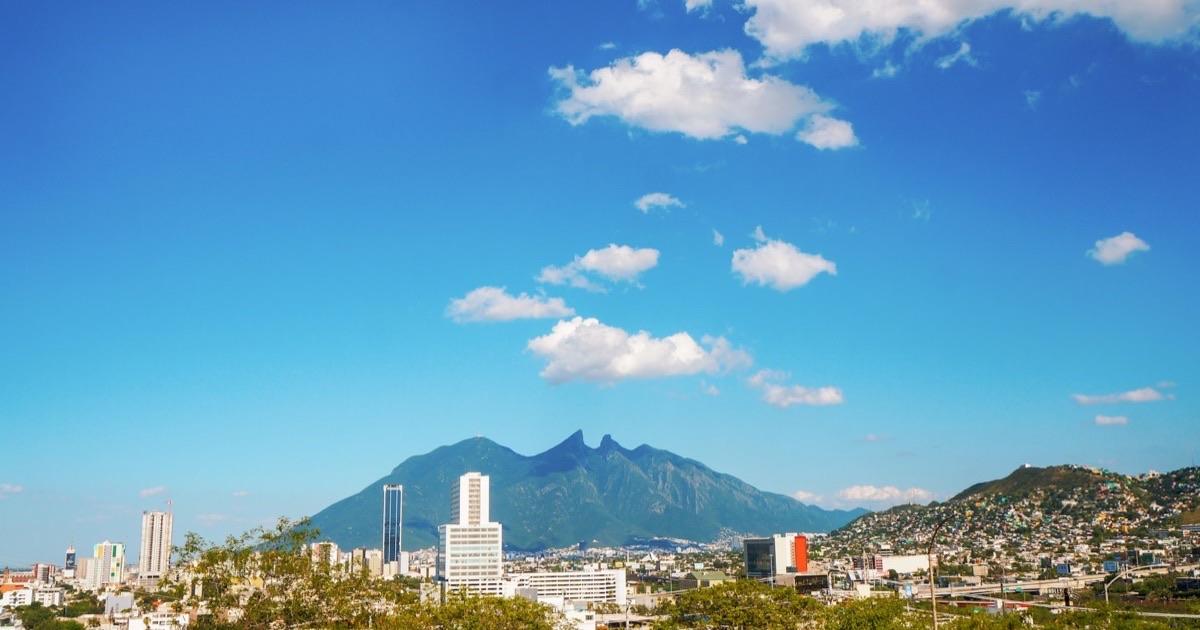
- Cerro de la Silla and the outdoors — Monterrey's mountain setting; Chipinque and the Parque Nacional Cumbres for hikers
- Cabrito and local food — Nuevo León's signature dish is cabrito (roast kid goat); point guests to the regional food scene and the carne asada culture
- Day trips — Grutas de García (caves), the Cola de Caballo waterfall near Villa de Santiago, and the Pueblo Mágico of Santiago
- Heat and summer weather — Monterrey summers are hot; advise guests to hydrate, plan outdoor activity for mornings, and expect warm evenings even after dark
- Tap water — not drinkable; advise guests to use bottled or filtered water and provide it
- Rideshare etiquette — Uber and DiDi are cheap and reliable; the match-day rule is rideshare to a transit connection, not door-to-door to the stadium
- Safety basics — standard big-city precautions; secure valuables on transit, use app-based transport at night
- Currency and tipping — pesos, card acceptance, typical tipping norms
Minimum Stays and Cancellation
Recommended minimum-stay strategy:
- June 13–15, Sweden–Tunisia window: 3-night minimum — capture the tournament's steepest match-day premium
- June 14–20, Tunisia bridging window: consider offering a longer 5–7 night option for Tunisian fans attending both Monterrey matches
- June 19–21, Tunisia–Japan window: 3-night minimum
- June 23–25, South Korea–South Africa window: 2-night minimum
- June 28–30, Round of 32 window: 3-night minimum — knockout match, high-intent demand
- All other tournament-window nights: standard 2-night minimum
For cancellation policy, a moderate policy converts more early international bookings — Sweden, Japan, and Tunisia fans booking months ahead want flexibility. For US-border guests driving down, flexible policies also help, since cross-border travel plans can shift. Strict policies serve late, high-commitment bookers better.
Action Checklist for Monterrey Hosts
- Confirm which municipality your listing is in — Monterrey, Guadalupe, San Pedro Garza García, San Nicolás, or another metro municipality — and check that municipality's specific business-licensing requirements. They are not the same office or the same process.
- Confirm the 3% lodging tax is being collected on your listing. The Monterrey-area lodging tax is collected and remitted by Airbnb for Nuevo León listings — verify it is enabled.
- Confirm your federal tax position. Make sure you have an RFC, and confirm with a Mexican accountant how federal ISR and IVA withholding apply to you given your SAT registration status.
- Price aggressively but verify against booked listings. Monterrey carries the tournament's steepest documented match-day premiums, but a high multiplier only works if comparable listings near you are actually booking at those rates. Check booked — not asking — rates for your match dates.
- Set tiered pricing using the match-phase framework above — roughly 2.6x baseline for Sweden vs. Tunisia, 2.5x for the Round of 32, lower for the other group matches. Use the pricing calculator for specifics.
- Check your building's condo/HOA rules. A condominium regime can restrict short-term rentals regardless of municipal policy — confirm before listing.
- Set minimum stays aligned with demand windows. 3 nights for the steep-premium matches; consider a longer 5–7 night option for Tunisian fans bridging the June 14 and June 20 fixtures.
- Plan for US-border guests. A meaningful share of Monterrey demand will drive down from Texas — include border-crossing documentation, crossing points, and drive times in your guidebook.
- Write your World Cup guidebook section covering Metrorrey access, the stadium's Guadalupe location, the Parque Fundidora Fan Festival, summer heat, and day trips like Grutas de García and Santiago.
- Lean into Monterrey's identity. El Gigante de Acero, the Cerro de la Silla skyline, the carne asada and cabrito culture, the mountain outdoors — these are genuine selling points for international guests.
For the full operational playbook, the main host guide covers everything from pricing to guest prep to match-day messaging.
Hosting in one of Mexico's other host cities? See the companion guides for Mexico City and Guadalajara.

Disclaimer: This article is for informational purposes only and does not constitute legal, tax, or financial advice. Short-term rental regulations, lodging taxes, transit details, and event details are subject to change, and Mexican STR rules are actively evolving. Verify current rules with the City of Monterrey, the relevant metro municipality, the State of Nuevo León, and a qualified Mexican professional before publishing or operating. All financial projections are Deloitte/Airbnb/AirDNA/AirROI market estimates, not settled facts.
Part of our FIFA 2026 hosting series.
Sources: FIFA World Cup 2026 official match schedule; FIFA Monterrey host city announcements; FOX Sports and NBC Sports match listings; StadiumDB venue data; BNBCalc analysis of Monterrey / Nuevo León STR regulation; Airbnb tax-collection documentation for Nuevo León; TheLatinvestor Mexican tax analysis; AirROI and AirDNA World Cup 2026 short-term rental datasets; Airbnb FIFA 2026 host earnings forecasts; Metrorrey transit information; The World Cup Guide and Monterrey host-city travel sources for Parque Fundidora and stadium logistics. Regulatory details reflect the position in early 2026. Verify current rules with the City of Monterrey, the relevant metro municipality, the State of Nuevo León, and a qualified Mexican professional before publishing or operating. Financial projections are Deloitte/Airbnb/AirDNA/AirROI market estimates, not settled facts.
Last updated on