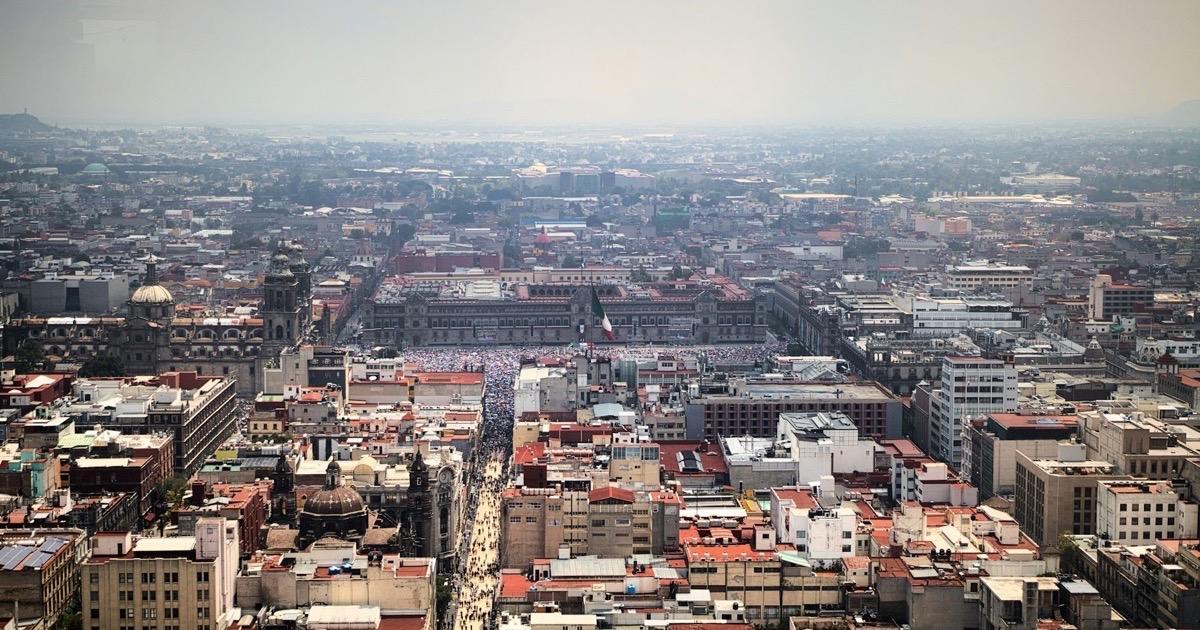
FIFA 2026 Airbnb Host Guide: Mexico City
Five matches at Estadio Azteca, including the World Cup opening match on June 11 — the first stadium in history to open a World Cup three times. Two Mexico matches. A Round of 32 and a Round of 16. The biggest FIFA Fan Festival of any host city, in the Zócalo. But Mexico City is also the only host city in the tournament where the law caps how many nights you can rent. Here's what CDMX hosts need to know.
Mexico City is the symbolic heart of FIFA 2026. Estadio Azteca — operating as Estadio Ciudad de México under FIFA naming rules — hosts the opening match on June 11, when Mexico plays South Africa. No stadium has ever opened a World Cup three times; the Azteca will, after 1970 and 1986. Five matches run from that opener through a Round of 16 on July 5, including a second Mexico match on June 24 and a Round of 32.
For hosts, the demand picture is enormous. AirROI data shows the Mexico host-city cluster leading the entire tournament for year-over-year rate growth, with ADRs up roughly 184% — a steeper jump than the US or Canadian markets. Airbnb's own forecast puts Mexico City's average nightly rate at around US $68 — the highest of the three Mexican host cities, ahead of Monterrey and Guadalajara. Airbnb projects roughly 44,000 guests and 274,000 nights booked on its platform in the city during the tournament window.
But Mexico City carries a regulatory reality no US or Canadian host city has: a legal cap on rental nights. Under the 2024 reforms widely known as the “Ley Airbnb,” a registered short-term rental in Mexico City cannot be occupied for more than 50% of the year — a hard ceiling of 180 nights. For a host planning around a 39-day tournament, that is not an abstract policy detail. It is the single most important number in your FIFA planning, and it changes how you think about every other booking decision in 2026.
This guide covers the five-match schedule, Mexico City's registration regime and the 180-night cap, the pricing opportunity, Metro and Tren Ligero access to the Azteca, the Zócalo Fan Festival, and the neighborhoods that perform best for international guests.
A note on audience and currency: This guide is written for hosts operating short-term rentals in Mexico City under City of Mexico City (CDMX) and Mexican federal rules. It is also useful for US and international hosts who own CDMX property or want to understand the market. Peso figures are marked MXN; US dollar equivalents are marked USD and are approximate, since the exchange rate moves.
The Match Schedule: Five Matches, the Opening Match, a July 5 Round of 16
Estadio Azteca hosts five matches between June 11 and July 5:
- June 11 — Mexico vs. South Africa (Group A) — the World Cup opening match
- June 17 — Uzbekistan vs. Colombia (Group K)
- June 24 — Mexico vs. Czechia (Group A)
- June 30 — Round of 32
- July 5 — Round of 16
Schedule strength makes Mexico City the most demand-dense host market in Mexico:
- The opening match on June 11 is the single highest-demand night of the tournament in Mexico. Mexico vs. South Africa is the curtain-raiser for the entire World Cup, preceded by an opening ceremony featuring Maná, Alejandro Fernández, Los Ángeles Azules, J Balvin and others. Every fan who can be in Mexico City wants to be in Mexico City that night. This is the ceiling of what CDMX pricing can achieve, and it will be booked months out.
- Mexico vs. Czechia on June 24 is the second home match. El Tri playing a competitive group-stage fixture at the Azteca produces nationwide domestic travel demand on top of international visitors. The eight-day gap between Mexico's two matches creates a long-stay bridging window — fans who follow El Tri may book the full June 11–24 stretch rather than two separate trips.
- Uzbekistan vs. Colombia on June 17 is the international-draw fixture. Colombia brings one of the largest and most reliable traveling fanbases in the Americas, and the Colombian diaspora across Mexico and the US will focus on this match. Uzbekistan is a first-time qualifier with modest travel numbers. This is the most accessible of the five for hosts pricing for value-seeking fans.
- The Round of 32 on June 30 is a knockout match with unknown participants. The teams are determined by group-stage results. Whether Mexico is involved swings the demand profile dramatically — an El Tri knockout match at the Azteca would be a near-opening-match-level night. Price the date as high-demand and adjust upward fast if Mexico advances into it.
- The Round of 16 on July 5 is Mexico City's deepest knockout match. A Sunday-evening knockout fixture with quarter-final implications. High-intent, price-inelastic demand: fans traveling for a Round of 16 have already committed significant money to be there.
Regulations: Mexico City Is the Only Host City With a Legal Cap on Rental Nights
Every US and Canadian host city regulates short-term rentals through licensing, taxes, and zoning. Mexico City does all of that — and adds something none of them have: a hard legal limit on how many nights per year you can rent. Understanding the regime is non-negotiable for FIFA planning.
The 180-night / 50% occupancy cap
In April and October 2024, Mexico City's Congress amended the Tourism Law, the Housing Law, and the Reconstruction Law to regulate platform-based short-term rentals. The headline rule: a property registered as a short-term rental cannot be occupied for more than 50% of the calendar year — effectively a 180-night ceiling. The cap is enforced through mandatory platform reporting; platforms are expected to track nights and block bookings once a property reaches the limit. Hosts must also file occupancy reports twice a year with the city's Tourism Ministry. Exceeding the cap means your registration is not renewed, and the property cannot be re-registered for one year.
For FIFA hosts, the practical takeaway is straightforward: the World Cup window is 39 days, and you have 180 nights for the whole year. Tournament dates are the most valuable nights you will book in 2026 — so plan the rest of your calendar around protecting them. A host who runs hard in the spring can arrive at June with much of the annual allowance already spent. Treat your 180 nights as a budget, and reserve enough of it for June–July.
Registration and the Host Registry
- Host Registry (Padrón de Anfitriones): Every short-term rental must be registered with Mexico City's Host Registry. Each property is registered separately and receives a unique registration number used on the listing.
- Registration term: The registration is valid for two years and must be renewed roughly 30 days before expiry.
- Documents typically required: government ID, proof of address, proof of property ownership or right to lease, and civil liability insurance.
- Multi-property hosts: Operating four or more properties triggers additional requirements — commercial zoning, business licenses, and operating permits. Most individual FIFA hosts with one or two listings stay in the simpler individual-host track.
- Prohibited housing: It is illegal to register social/affordable housing (including Infonavit-program homes) or properties rebuilt under post-2017-earthquake reconstruction programs as short-term rentals.
Taxes
- Lodging tax (Impuesto sobre Hospedaje): Mexico City levies a lodging tax of roughly 3–5% on the listing price. Hosts register with the city's finance ministry; platforms such as Airbnb may collect and remit on the host's behalf. Confirm your platform's settings.
- Federal taxes: Short-term rental income is subject to federal income tax (ISR) and value-added tax (IVA, 16%). Airbnb withholds certain federal taxes for hosts in Mexico. This is an area to confirm with a Mexican accountant (contador) — federal tax treatment depends on your registration status with the SAT (tax authority).
- National Tourism Registry: Mexican federal tourism law also calls for registration in the Registro Nacional de Turismo.
Enforcement reality
Industry data shows that, historically, a very large share of Mexico City listings have operated without full registration, and enforcement has been inconsistent. That is changing: the platform-reporting mechanism behind the 180-night cap is precisely the kind of enforcement infrastructure that did not exist before. Hosts who treat the 2024 rules as optional are taking a real risk for the highest-demand year their market will ever see. Register, and register early — a delisting in June 2026 is the most expensive mistake a CDMX host can make.
The Pricing Opportunity: The Highest Rates of Any Mexican Host City — Within a Capped Calendar
Mexico City is the strongest of the three Mexican markets on rate. Airbnb's forecast puts the city's tournament-window average around US $68 per night — above Monterrey (~$58) and Guadalajara (~$46). AirROI's tournament dataset shows the Mexico cluster leading all three host nations with roughly +184% year-over-year ADR growth, and AirDNA has reported demand surges across Mexico's World Cup cities with Mexico City match-day prices up around 155% for June 2026.
Two things make CDMX pricing distinctive:
- The premium is large in percentage terms but the absolute baseline is low. Mexican host cities run booked rates several times cheaper than US or Canadian markets — value-tier inventory in Mexico City sits under US $90/night even into the tournament. A 155%+ match-day premium on a modest baseline is still an excellent return, but it is not US-style ceiling pricing. Price to your actual market, not to headlines from Dallas or Vancouver.
- The 180-night cap changes the math. In an uncapped market, the pricing question is simply “what is the most I can charge and stay booked?” In Mexico City, it is also “is this the best use of one of my remaining 180 nights?” During the tournament, the answer is almost always yes — which is the entire argument for protecting June–July allowance earlier in the year.
Demand is also predominantly domestic. Mexican fans traveling within their own country for El Tri, plus the enormous Mexico City metro population itself, mean a large share of FIFA demand is internal. International visitors — Colombian fans for June 17, traveling support for the knockout rounds — layer on top. Price the two Mexico matches (June 11, June 24) and the knockout rounds for peak demand; price June 17 competitively to capture the international value-seeker.
Pricing by match phase
A match-phase framework for the Mexico City market, expressed as multipliers on your normal summer baseline rate:
- Opening match (June 11): 2.5x baseline — the single highest-demand night of the tournament in Mexico
- Mexico vs. Czechia (June 24): 2.2x baseline — second home match, strong domestic demand
- Group stage non-Mexico match (June 17): 1.7x baseline — international draw, price competitively
- Round of 32 (June 30): 2.1x baseline — adjust sharply upward if Mexico advances into this match
- Round of 16 (July 5): 2.3x baseline — deepest knockout match, price-inelastic demand
- Within 1 day of any match: 1.4x baseline — adjacency premium for arriving/departing fans
- All other tournament-window nights: 1.25x baseline — event-window premium across the board
These multipliers are starting points. Cross-reference against what comparable listings in your neighborhood are actually getting booked at — booked rates, not asking rates — before committing.
Try the FIFA 2026 Pricing Calculator →
Enter your base summer rate and select Mexico City as your host city. The calculator applies the match-phase multipliers above and returns a proposed nightly price for every day in June and July 2026.
Getting Guests to Estadio Azteca: Metro Line 2 to Tasqueña, Then the Tren Ligero
The Azteca sits in the Coyoacán borough in the south of the city, well away from the central neighborhoods where most guests will stay. Match-day traffic around the stadium is severe, and authorities have signaled limited or no general public parking for major events — for the stadium's March 2026 reopening, fans were directed entirely to public transport and remote lots. Public transit is the answer, and it is cheap and reliable.
Metro + Tren Ligero (the recommended route)
- The route: Take Metro Line 2 (the Blue Line) south to Tasqueña, the southern terminus. At Tasqueña, transfer to the Tren Ligero (light rail) heading toward Xochimilco and ride to Estadio Azteca station — a roughly five-minute walk from the stadium gates.
- Fare: The Metro costs 5 MXN (about US $0.30); the Tren Ligero is a separate fare of 3 MXN. Total round-trip cost is a few pesos — among the cheapest stadium access of any host city in the tournament.
- The card: Guests need an integrated mobility card (the same card works across Metro, Metrobús, Tren Ligero, Cablebús and RTP buses). Advise guests to buy and load the card the day before a match to skip ticket lines.
- Trip time: From central neighborhoods like Roma or Condesa, plan 45–60 minutes door to door. The city has invested heavily in Metro and light-rail upgrades for the tournament and is extending service hours on match days.
Buses and other options
- RTP city buses run along Calzada de Tlalpan and Periférico Sur, dropping passengers a few blocks from the stadium. Buses also connect from Universidad station (Metro Line 3) directly toward the Azteca.
- Uber, DiDi and Cabify operate widely and are inexpensive by international standards. The practical advice for guests: rideshare to a transit station is fine, but a car directly to the stadium for an evening kickoff means surge pricing and gridlock. The tested local move is light rail in, and rideshare home only from Tasqueña outward — never a personal car.
- Driving is the worst option. Parking is scarce, approach roads (Calzada de Tlalpan, Periférico, Circuito Azteca) clog hours before kickoff, and post-match exit can take over an hour.
A guidebook line worth including verbatim: tell guests to exit the stadium promptly at the final whistle to beat the worst of the Tren Ligero queues, and that the light rail runs extended post-match service.
The FIFA Fan Festival at the Zócalo
Mexico City's official FIFA Fan Festival is in the Zócalo — the Plaza de la Constitución, the vast main square at the heart of the Centro Histórico. It is the most ambitious Fan Festival of the entire tournament: organizers have confirmed a 510-square-meter LED screen — the largest of any Fan Festival across the three host countries — showing all 104 matches free of charge, with the festival running the full 39 days from June 11 to July 19. Officials project the Zócalo Fan Festival will draw around 2.2 million visitors over the tournament, with up to 100,000 people expected on Mexico match days.
Access is easy: the Zócalo has its own Metro Line 2 station (Zócalo) and is served by Metrobús Line 4. For a host, the Fan Festival is a genuine selling point — a guest staying in or near the Centro Histórico can walk to the world's biggest Fan Festival and take Metro Line 2 directly south toward the stadium on match days, no transfers until Tasqueña.
The city has also announced “Festivales Futboleros” in all 16 boroughs (alcaldías) — free neighborhood viewing events with screens and activities — plus a cultural corridor of museum exhibitions tied to the tournament. Whatever borough your listing is in, there is likely a local fan event you can point guests toward.
Best Neighborhoods for Hosts
Mexico City is vast, and the Azteca is in the south, but the neighborhoods that perform best for international guests are the central, walkable ones with strong Metro access to Line 2:
- Roma Norte — the city's signature visitor neighborhood: tree-lined streets, boutique cafés and restaurants, strong design-led housing stock, premium ADR, excellent Metro access. The default recommendation for international FIFA guests.
- Condesa — adjacent to Roma, leafy and walkable, parks and nightlife, premium ADR. Roma and Condesa together are the heart of the visitor market.
- Polanco — the upscale corridor: luxury rates, fine dining, near the National Museum of Anthropology. Suits high-budget guests; rates during match weeks run well above the city average.
- Centro Histórico — walking distance to the Zócalo Fan Festival, dense with landmarks, direct Metro Line 2 to the stadium. Strong choice specifically because of the Fan Festival adjacency.
- Juárez / Cuauhtémoc — central, increasingly popular, well-connected, slightly more moderate rates than Roma–Condesa.
- Coyoacán — historic, characterful, and the borough the stadium itself sits in. Closer to the Azteca than the central neighborhoods, with a strong identity of its own (Frida Kahlo's Casa Azul, colonial plazas).
- Del Valle — residential, well-served by transit, moderate rates, a quieter base that still connects cleanly to the center and south.
- Nápoles / Narvarte — solid mid-market neighborhoods with good Line 2 and Metrobús access, often better value than Roma–Condesa for the same transit convenience.
A regulatory note that intersects with neighborhood choice: the 2024 reforms were driven explicitly by gentrification concerns concentrated in Cuauhtémoc, Miguel Hidalgo and Benito Juárez boroughs — which cover Roma, Condesa, Juárez and parts of the most popular host territory. Hosts in these areas should expect the closest regulatory attention and should be scrupulous about registration.
What to Put in Your Guidebook
Mexico City–specific content for World Cup guests:
- Metro + Tren Ligero instructions to the Azteca — Line 2 to Tasqueña, transfer to the Tren Ligero, exit at Estadio Azteca station; total fare a few pesos; buy the mobility card a day ahead
- Zócalo Fan Festival — free entry, the largest screen of any host city, all 104 matches, Metro Line 2 (Zócalo station) or Metrobús Line 4
- Altitude — Mexico City sits at roughly 2,240 meters (about 7,350 feet). Tell guests to take their first day slow, hydrate constantly, and ease into alcohol; symptoms typically pass within 24–48 hours
- Tap water — not drinkable; advise guests to use bottled or filtered water and provide it
- Rainy season — June and July are Mexico City's rainy months: warm days, frequent afternoon and evening thunderstorms. A light waterproof layer for every match, especially evening kickoffs
- Rideshare etiquette — Uber, DiDi and Cabify are cheap and reliable; the match-day rule is rideshare to a transit station, not to the stadium
- Neighborhood food guidance — taquerías, markets, and where to eat in Roma, Condesa, Coyoacán and the Centro
- Safety basics — standard big-city precautions; secure valuables on a crowded Metro, use official or app-based transport at night
- Match-day timing — arrive at the stadium well ahead of kickoff (security for international matches is slow); leave promptly at the whistle to beat transit queues
- Spanish-language basics — a few key phrases; most visitor-facing staff in central neighborhoods speak some English, but Spanish is appreciated
- Currency and tipping — pesos, card acceptance, typical tipping norms
Minimum Stays and Cancellation
Recommended minimum-stay strategy. Note that minimum stays interact with the 180-night cap — longer minimums on premium dates concentrate your limited allowance on your highest-value nights:
- June 10–12, opening-match window: 3-night minimum — capture the opening-match premium
- June 16–18, Uzbekistan–Colombia window: 2-night minimum
- June 11–24, El Tri bridging window: consider offering a longer 5–7 night option to capture fans following Mexico across both home matches
- June 23–25, Mexico vs. Czechia window: 3-night minimum
- June 29 – July 1, Round of 32 window: 3-night minimum
- July 4–6, Round of 16 window: 3-night minimum
- All other tournament-window nights: standard 2-night minimum
For cancellation policy, a moderate policy converts more early international bookings — fans booking months ahead want flexibility in case their team is eliminated before their travel dates. Strict policies serve late, high-commitment bookers better. For the opening match specifically, demand is strong enough that a firmer policy is defensible.
Action Checklist for Mexico City Hosts
- Register your property in the Host Registry now. Each property needs its own registration and unique number. Gather your ID, proof of address, proof of ownership, and civil liability insurance. A delisting during the tournament is the most expensive mistake you can make — do not leave registration until spring.
- Map your 180-night cap for the whole of 2026. Count nights already booked or planned, and confirm you have enough allowance reserved for June 11 – July 19. The tournament is the most valuable window of the year; protect it.
- Confirm your platform tax settings. Verify that lodging tax collection is enabled for your listing, and confirm with a Mexican accountant how federal ISR and IVA apply to you given your SAT registration status.
- Set tiered pricing using the match-phase framework above — roughly 2.5x baseline for the opening match, 2.2x for Mexico vs. Czechia, 2.3x for the Round of 16, lower for June 17. Use the pricing calculator for specifics.
- Cross-check your rates against booked listings nearby. Look at what comparable Roma, Condesa, or Centro listings are actually getting booked at — not asking — for the specific match dates.
- Set minimum stays aligned with demand windows. 3 nights for premium matches, and consider a longer 5–7 night option across June 11–24 for fans bridging both Mexico matches.
- Write your World Cup guidebook section covering Metro + Tren Ligero access, the Zócalo Fan Festival, altitude, tap water, rainy-season packing, and rideshare etiquette.
- Emphasize transit access in your listing. Phrases like “Metro Line 2 — direct to the Estadio Azteca corridor” or “10 minutes' walk to the Zócalo Fan Festival” are high-value for international guests planning match days.
- Plan for a predominantly domestic, Spanish-speaking guest base alongside international visitors. Bilingual guidebook content and messaging widens your market.
- Lean into the opening-match story. Mexico City opens the World Cup for the third time in history — no other host city has anything like it. It is a genuine, unique selling point for your listing.
For the full operational playbook, the main host guide covers everything from pricing to guest prep to match-day messaging.
Hosting in one of Mexico's other host cities? See the companion guides for Guadalajara and Monterrey.

Disclaimer: This article is for informational purposes only and does not constitute legal, tax, or financial advice. Short-term rental regulations, transit pricing, lodging taxes, and event details are subject to change, and Mexican STR rules in particular have been actively evolving. Verify current rules with the Government of Mexico City and a qualified Mexican professional before publishing or operating. All financial projections are Deloitte/Airbnb/AirDNA/AirROI market estimates, not settled facts.
Part of our FIFA 2026 hosting series.
Sources: FIFA World Cup 2026 official match schedule; FIFA Fan Festival announcements; Host City Ciudad de México; FOX Sports and beIN Sports match listings; StadiumDB and Estadio Azteca venue data; Garrigues and Hostaway analyses of Mexico City STR regulation; Mexico News Daily and AméricaEconomía coverage of the 2024 Tourism/Housing Law reforms; AirDNA and AirROI World Cup 2026 short-term rental datasets; Airbnb News (Host Earnings Calculator and “Role of Airbnb in the 2026 FIFA World Cup”); Mexico City Metro and Servicio de Transportes Eléctricos (Tren Ligero) information. Regulatory details reflect the 2024 reforms as reported through 2025; verify current rules with the Government of Mexico City before publishing or operating. Financial projections are Deloitte/Airbnb/AirDNA/AirROI market estimates, not settled facts.
Last updated on