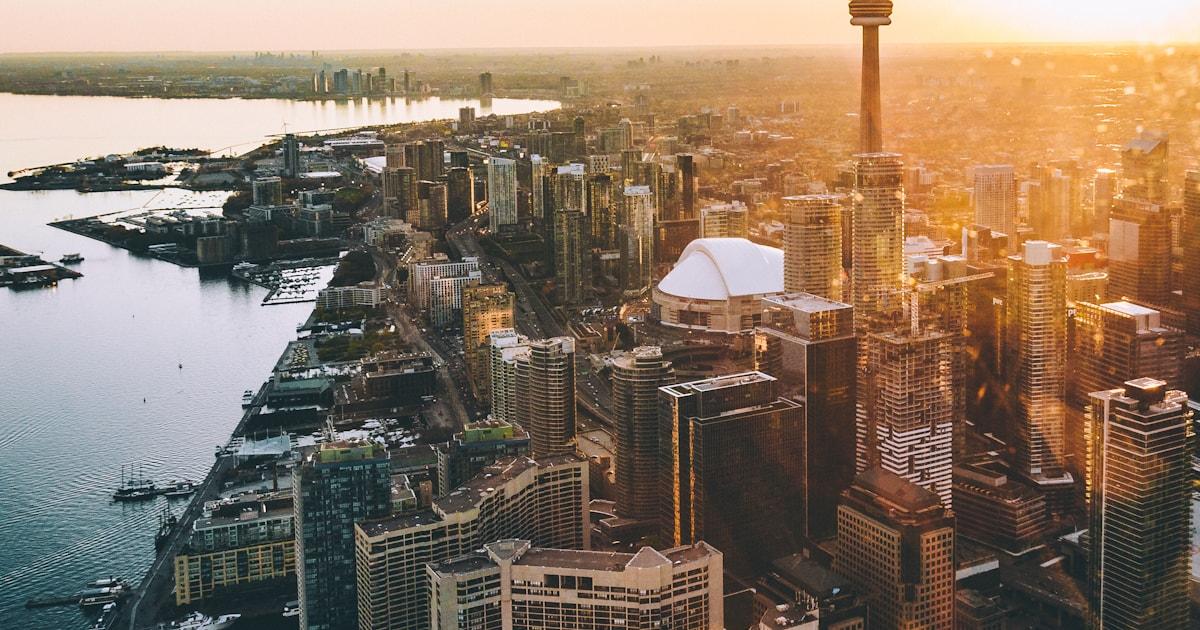
FIFA 2026 Airbnb Host Guide: Toronto
Six matches at BMO Field — including the first men’s World Cup match ever played on Canadian soil. Canada’s home opener on June 12. Germany. A Round of 32 on July 2. Exhibition GO direct from Union Station. The Fan Festival at Fort York. And Toronto’s principal-residence STR regime — the strictest of any host city in North America. Here’s what Toronto hosts need to know.
Toronto is one of two Canadian host cities for FIFA 2026, and the only one staging Canada’s first men’s World Cup match on home soil. The first men’s World Cup match ever played in Canada happens at Toronto Stadium (BMO Field’s tournament name) on June 12 at 3 PM ET, when Canada opens its tournament against Bosnia and Herzegovina. Five more matches follow through July 2, when Toronto hosts a Round of 32 knockout fixture — the city’s highest-stakes match of the entire tournament.
For Toronto Airbnb hosts, the FIFA window is the largest single demand event the city has ever seen. Airbnb reports flight searches to Toronto are up 350% year-over-year, and the platform projects 187,000 guest nights on Airbnb alone during the tournament window. Deloitte projects average Toronto host earnings at $2,000 USD over the tournament — a conservative number that real booking data is already exceeding for downtown listings near the stadium.
But Toronto’s regulatory environment is genuinely different from the US host cities in this series. Toronto allows short-term rentals only in your principal residence. No investment properties, no second homes, no buying a condo to flip for the World Cup. The City of Toronto’s principal-residence rule, paired with a 180-night annual cap on entire-unit rentals and mandatory $390 registration, is the strictest STR regime of any host city in North America. The Municipal Accommodation Tax has also been temporarily increased to 8.5% for the entire World Cup window, up from the standard 6%.
This guide covers the six-match schedule, what Toronto’s principal-residence regime actually means for hosts, the Exhibition GO and 509/511 streetcar routes that will move most of your guests, the Fort York Fan Festival, and the neighborhoods where Toronto Airbnbs perform best.
The Match Schedule: Canada’s Historic Opener, Six Matches Through July 2
Toronto Stadium (BMO Field) hosts six matches between June 12 and July 2:
- June 12, 3 PM ET — Canada vs. Bosnia and Herzegovina (Group B) — Canada’s first-ever men’s World Cup match on home soil
- June 17, 7 PM ET — Ghana vs. Panama (Group L)
- June 20, 4 PM ET — Germany vs. Ivory Coast (Group E)
- June 23, 7 PM ET — Panama vs. Croatia (Group L)
- June 26, 3 PM ET — Senegal vs. FIFA Playoff Winner 2 (Group H)
- July 2, 7 PM ET — Round of 32 (Group K 2nd place vs. Group L 2nd place)
Schedule strength makes Toronto distinctive:
- The June 12 Canada opener is the most emotionally significant fixture in Canadian football history. The first men’s World Cup match ever played on Canadian soil, in front of a sold-out crowd at the smallest stadium in the tournament. Tickets are gone. Demand for accommodation around this date will be unlike anything Toronto Airbnb has seen. Domestic Canadian demand alone will fill the city.
- June 17 Ghana vs. Panama brings strong Ghanaian diaspora demand. Toronto has one of the largest Ghanaian-Canadian communities in North America, concentrated in Scarborough and northwest Toronto. Ghana’s traveling support is enthusiastic; Panama’s is smaller but the Central American community in the GTA will turn out.
- June 20 Germany vs. Ivory Coast is the marquee Group E fixture. Germany brings the largest traveling support of any European team. The German-Canadian community is well-established and Ivory Coast brings significant West African support. A Saturday afternoon Group E fixture between two well-supported teams — premium pricing night.
- June 23 Panama vs. Croatia is Group L’s return engagement. Panama plays twice in Toronto, creating an 8-day window for Panamanian fans bridging both fixtures. Croatia’s traveling support is loyal and Toronto’s Croatian-Canadian community (one of the largest outside Croatia, concentrated around Mississauga and west Toronto) will drive significant regional demand.
- June 26 Senegal vs. FIFA Playoff Winner 2 brings West African intensity to the closing group-stage match. Senegal’s diaspora is meaningful in Toronto and the team’s traveling support is enthusiastic. The opponent is decided by the FIFA playoff (Bolivia, Suriname, or Iraq), each of which carries different demand implications — verify the matchup at publish time and update minimum-stay strategy accordingly.
- The Round of 32 on July 2 is Toronto’s highest-stakes match. A Thursday evening knockout fixture, teams determined by group-stage results. This is the ceiling of what Toronto pricing can achieve. Fans of both qualifying teams will need accommodation on short notice — if you still have this night available, price it accordingly.
Regulations: Toronto’s Principal-Residence Rule Is the Strictest of Any Host City
Toronto’s STR regime is structurally stricter than every US host city in this tournament — and most Canadian markets. You cannot operate a Toronto short-term rental unless the property is your principal residence. This isn’t a tax issue — it’s a hard regulatory floor. If you’ve been hosting in Toronto for a while you know the rules; this section is your FIFA-window refresher and a fines-and-enforcement check before the highest-stakes 39 days of the year.
What Toronto requires
To legally operate a short-term rental in Toronto, you must:
- Operate from your principal residence only: The home where you actually live and use as the address on your bills, ID, taxes, and insurance. Only one principal residence per person. Investment properties, second homes, and vacation properties do not qualify.
- Register with the City of Toronto: Apply through the City’s online portal. Registration fee is $390 (2026), paid by credit card, non-refundable. Processing can exceed 90 days during high-volume periods.
- Provide Ontario-issued ID: Only an Ontario Driver’s Licence or Ontario Photo Card is accepted. Out-of-province ID will not work — you’ll need to obtain provincial ID before registering, which can take 4–6 weeks.
- Submit two pieces of evidence of principal residence beyond ID — utility bills, property tax statements, vehicle registration, banking statements, employment documents.
- Display your STR registration number (format: STR-0000-XXXXXX) on every listing across every platform. Airbnb and VRBO will remove listings that don’t display a valid number.
- Submit to annual inspections. As of January 2025, all approved registrations are subject to annual compliance inspections. You must be present.
- Renew every year ($390 renewal fee, also subject to annual increase).
Entire-unit vs. partial-unit registration
This distinction matters more for FIFA pricing than almost any other regulatory detail:
- Entire-unit rentals: You rent the whole property, you’re not on-site during the stay. Capped at 180 nights per calendar year. This is the standard “Airbnb your whole place” model.
- Partial-unit rentals: You live in the home and rent up to three bedrooms while remaining on-site. No annual night cap.
You choose your registration type at application and can only switch on renewal. If you switch from partial-unit to entire-unit mid-year, partial-unit nights count toward the 180-night cap for that calendar year. The 180-night limit resets every January 1.
The practical implication for FIFA hosts: if you already operate as an entire-unit rental and you’ve used significant nights between January and May 2026, you may run up against the 180-night cap during the tournament. Track your nights carefully and don’t risk a $700+ fine for exceeding the limit during the highest-demand window of the year.
The 8.5% MAT — temporarily increased through July 31, 2026
The City of Toronto temporarily increased the Municipal Accommodation Tax (MAT) from 6% to 8.5% effective June 1, 2025 through July 31, 2026 — which covers the entire FIFA 2026 tournament window. The increase was implemented partly to fund the city’s $380 million FIFA hosting costs.
What hosts need to know:
- 8.5% MAT applies to every stay under 28 consecutive days during the tournament window.
- Airbnb and VRBO collect and remit MAT automatically on stays booked through their platforms under Voluntary Collection Agreements with the City. You don’t handle it manually for those bookings.
- Direct bookings are your responsibility. If you accept reservations outside Airbnb/VRBO, you must collect 8.5% MAT yourself and remit it quarterly through the City’s online portal.
- You must file a quarterly MAT report regardless of whether the platform collected on your behalf. Reports are due within 30 days of quarter-end. Q2 (April–June) is due July 30. Q3 (July–September) is due October 30.
- MAT reverts to 6% on August 1, 2026 — but for FIFA purposes, you’re operating at 8.5% throughout.
Condo boards can override the city
Critical for downtown Toronto hosts: even if your condo is your principal residence and you have a valid City registration, your condo corporation’s bylaws can prohibit short-term rentals. Many Toronto condo declarations and rules explicitly ban STRs, and a condo ban overrides City approval.
Before registering with the City, check your condo’s declaration, rules, and any recent governance changes. Search for “short-term rental,” “transient accommodation,” or “hotel use” in your condo documents. If your board has banned STRs and you operate anyway, you may face condo fines, legal action, or even loss of unit access — separate from any City enforcement.
Condominium property managers notify the City of bylaws prohibiting STRs, and the City maintains a list of buildings where short-term rentals are not permitted. If your building is on this list, your registration application will be denied.
Fines and enforcement
Toronto actively enforces its STR bylaw using third-party data tools and shared platform data. Penalties under Toronto Municipal Code Chapter 547:
- Failing to register a short-term rental: $1,000 fine
- Advertising an unregistered STR: $1,000 fine
- Renting a property that is not a principal residence: $1,000 fine
- Renting an entire unit for more than 180 days: $700 fine
- Failing to provide evidence of principal residence: $700 fine
- Court-issued summonses: Up to $100,000 fine, plus daily fines of up to $10,000 for each day the violation continues, plus special fines for economic gain from the bylaw violation.
Toronto monitors platform data, conducts random inspections, and acts on neighbor complaints. The 180-night cap is tracked across platforms — listing on Airbnb and Booking.com doesn’t reset your count. If you operate without a valid registration, your listing will be removed and you may face cumulative fines.
The Pricing Opportunity: Real Demand, Real Risk
Toronto’s FIFA 2026 demand is the largest in the city’s STR history. The data is unambiguous:
- 146,000 fans expected in Toronto during the tournament window
- 187,000 guest nights projected on Airbnb alone (Airbnb travel trends data)
- Flight searches to Toronto up 350% year-over-year (Airbnb)
- Hotel rates up 107% in Toronto vs. summer 2025 (Globe and Mail), with the average projected at $531 CAD/night
- Toronto baseline ADR ~$149 CAD/night at normal occupancy (AirROI)
- Downtown match-day listings reaching $1,000+/night; nights before matches hitting $700+ on real bookings
- Deloitte projection: $2,000 USD average per Toronto host over the tournament — a conservative number that downtown listings near the stadium are already exceeding
But Toronto hosts need to think about the demand-pricing relationship more carefully than most US host cities, for two reasons:
The 180-night cap structurally limits supply. Toronto can’t add inventory the way Houston or Atlanta can. The principal-residence rule means new listings are hard to add quickly. That sounds like a pricing tailwind — and it is — but it also means that the listings that are already established with strong reviews will dominate booking flow. New hosts spinning up listings in May 2026 to capture FIFA demand will compete against years-established Toronto Superhosts with hundreds of reviews. Reviews and search ranking matter more in Toronto than in a market with elastic supply.
The Vancouver pricing wall is a warning sign. PriceLabs’ April 2026 data shows Vancouver hosts spiked ADRs 149% to $342, and BC Place’s occupancy growth came in at just +1% — the lowest of any host city in the tournament. The Paris 2024 Olympics saw a 57% price collapse from oversupply and overpricing. Aggressive pricing without underlying demand support kills bookings. Toronto’s demand is real, but so is the platform-algorithm penalty for listings priced significantly above comparable properties.
The strategy: price meaningfully above your baseline, but don’t price above what the booked listings around you are actually getting. The hosts who maximize earnings will be the ones who stay booked through the entire 39-day window, not the ones who set ceiling rates and watch their calendars empty.
Pricing by match phase
The pricing framework for the Toronto market:
- Group stage match nights (June 17, 20, 23, 26): 1.75x baseline summer rate (premium multiplier for European/Latin American/African demand)
- Canada opener (June 12): 2.40x baseline (premium reflecting historic Canadian demand and tournament-opening scarcity)
- Round of 32 (July 2): 2.50x baseline (highest premium for knockout-stage match)
- Within 1 day of any match: 1.40x baseline (elevated adjacency premium)
- All other tournament-window nights: 1.25x baseline (event-window premium across the board)
The framework reflects Toronto’s strong-but-not-unlimited demand. The Canada opener and the July 2 R16 are the ceiling nights. Fan groups bridging two matches — particularly Panama fans staying through June 17–23 — create multi-night booking opportunities that benefit from longer minimum stays.
Enter your base summer rate and select Toronto as your host city. The calculator applies the match-phase multipliers above and returns a proposed nightly price for every day in June and July 2026. Note: the calculator outputs rates exclusive of MAT, HST, platform fees, and cleaning fees — apply your own additions on top.
Getting Guests to Toronto Stadium: Exhibition GO and the 509/511 Streetcars
Toronto’s stadium transit picture is uniquely good for FIFA 2026: Exhibition GO Station is steps from BMO Field’s main gates, and both the TTC 509 Harbourfront and 511 Bathurst streetcars terminate at Exhibition Loop, also adjacent to the stadium. The same transit infrastructure serves the Fort York Fan Festival, meaning fans can attend the Fan Festival pre-match and walk to the stadium — a logistical convenience few other host cities offer.
GO Transit — Exhibition Station
- Lakeshore West Line: Direct service from Union Station to Exhibition GO Station in approximately 10 minutes. One stop west of Union.
- Match-day frequency: GO Transit is running every 15 minutes on both Lakeshore East and West lines throughout the tournament window — significantly enhanced from regular service.
- Fare: Approximately $5.55 CAD adult one-way Union to Exhibition (Presto card or QR ticket); fares depend on distance for guests starting from Mississauga, Oakville, or further out on the line.
- Access: Exhibition GO Station drops guests directly into Exhibition Place, with the stadium and Fan Festival both within a 5-minute walk.
TTC streetcar — 509 Harbourfront and 511 Bathurst
- 509 Harbourfront: Boards at Union Station and runs west along the waterfront directly to Exhibition Loop.
- 511 Bathurst: Connects from Bathurst Subway Station (TTC Line 2) to Exhibition Loop via Bathurst Street.
- Fare: Single TTC fare or Presto card tap covers both routes — $3.30 CAD adult fare with Presto, free transfers within 2 hours.
- Match-day note: The City is rerouting primary streetcar access to Fleet Street between Strachan and Fort York Boulevard during the tournament. Exhibition Loop will be used only by riders requiring accessibility ramps. Verify current routing before publishing guidebook directions.
- Realistic expectations: Streetcars will be at maximum capacity in the hour before kickoff. Guests should plan to board at least 90 minutes before match time.
UP Express from Pearson Airport
For guests flying into Toronto Pearson (YYZ), the UP Express train runs every 15 minutes between Pearson and Union Station, fare $12.35 CAD, 25-minute journey. From Union, guests transfer to the GO Lakeshore West to Exhibition Station (10 minutes) or the 509 streetcar (20 minutes).
Total Pearson-to-stadium transit time: 50–60 minutes via UP Express + GO, which is faster than driving on match days.
Billy Bishop (YTZ)
Toronto’s island airport (Porter Airlines and limited Air Canada service) is 3 km from BMO Field — a walkable distance along the waterfront for guests arriving with light luggage. For most guests, the ferry to the mainland plus a 509 streetcar or short walk gets to the stadium in under 30 minutes.
Driving and parking
Limited on-site parking at Exhibition Place, $25–50 CAD on match days, with significant traffic delays before and after kickoff. The City may close roads around Exhibition Place during the tournament, and primary vehicle access patterns will shift. For most guests, GO Transit or TTC will be faster than driving and parking — this should be the default recommendation in guidebooks.
The FIFA Fan Festival at Fort York and The Bentway
Toronto’s official FIFA Fan Festival runs 22 days from June 11 through July 19 at Fort York National Historic Site and The Bentway — the public space under the Gardiner Expressway in Toronto’s Fort York neighborhood. Free general admission (tickets released in batches, sold out within hours when initially released). Live music, food vendors, big-screen match viewing for every tournament fixture, and cultural programming representing the diverse communities of Toronto.
The Fan Festival’s location is a meaningful pricing factor: Fort York is a 15-minute walk from BMO Field, and accessible via the same Exhibition GO Station and 509/511 streetcars. Guests staying in Liberty Village, King West, Fort York, or the Entertainment District can attend the Fan Festival on non-match days and walk to matches when they have tickets. This combination is unique among host cities — most have stadium-area and fan-festival-area accommodations that are not the same neighborhoods.
For guidebook content: The Bentway also hosts the Toronto sign and the FIFA countdown clock photo opportunities, and Nathan Phillips Square downtown has a converted soccer pitch installation throughout the tournament window — both are guidebook-worthy stops for guests on non-match days.
Best Neighborhoods for Hosts
For Toronto Airbnb hosts looking at where listings perform best during FIFA:
- Liberty Village — premium ADR, immediately east of Exhibition Place, walkable to BMO Field and Fan Festival, restaurant and bar scene
- King West — premium ADR, between downtown and Liberty Village, nightlife district, easy 509 streetcar access
- Fort York / CityPlace — strong ADR, immediately adjacent to Fan Festival, walkable to stadium
- Entertainment District — premium ADR, hotel district, restaurants and bars, walking distance to Union Station
- Queen West — strong ADR, gallery and shopping district, 511 Bathurst streetcar access
- The Annex — moderate-to-strong ADR, residential character, near Bathurst Subway with 511 connection
- Distillery District — strong ADR, cobblestone Victorian heritage, walkable to downtown
- Yorkville — premium ADR, luxury shopping district, premium guest profile, subway access via Bay Station
- Roncesvalles — moderate ADR, Polish heritage neighborhood, Queen streetcar access, residential feel
- Scarborough Bluffs and east end — moderate ADR, longer transit times, appropriate for budget-conscious guest segments and Ghanaian-Canadian diaspora connections
Listings in Liberty Village, King West, Fort York, and the Entertainment District command the highest ADRs and offer the easiest transit access to both the Fan Festival and the stadium. Yorkville appeals to premium international guests; Queen West and the Annex offer character and value.
What to Put in Your Guidebook
Toronto-specific content for FIFA 2026 guests:
- GO Transit instructions — fare (~$5.55 CAD), frequency (every 15 minutes during tournament), Exhibition Station drop-off, 10 minutes from Union
- TTC streetcar instructions — 509 Harbourfront and 511 Bathurst routes to Exhibition Loop, $3.30 Presto fare, board 90 minutes before kickoff on match days
- Presto card setup — where to buy ($6 card fee plus loading), how to tap, where it works (TTC, GO Transit, UP Express)
- UP Express from Pearson — every 15 minutes, $12.35 CAD, 25 minutes to Union
- Fan Festival access — Fort York and The Bentway, June 11 – July 19, free, 15-minute walk from BMO Field
- CN Tower and Toronto Islands — primary tourist destinations, ferry to islands from Jack Layton Ferry Terminal
- St. Lawrence Market — peameal bacon sandwich at Carousel Bakery, food destinations, Saturday morning experience
- Kensington Market — vintage shops, street food, eclectic neighborhood experience
- Distillery District — Victorian heritage, restaurants, walkable from downtown
- Food and restaurants — Toronto’s diverse food scene including West African, Caribbean, Italian, Portuguese, Korean, Chinese, and Filipino communities; recommend specific restaurants near your listing
- Where to watch matches you’re not attending — Real Sports (largest sports bar in North America, 39-foot screen, near Union), Brazen Head Irish Pub in Liberty Village, neighborhood pubs throughout the city
- Weather preparation — June and July are warm and sometimes humid, average highs 24–27°C / 75–80°F, occasional thunderstorms; bring layers for evening matches
- eTA requirements for international guests — most non-US international visitors need an Electronic Travel Authorization to enter Canada; $7 CAD, takes minutes online for most nationalities
- Currency and tipping — Canadian dollar, 15–20% tipping standard at restaurants, debit/credit accepted nearly everywhere
- HST note — 13% Harmonized Sales Tax applies to most goods and services in Ontario; guests should expect prices to be marked pre-tax
Minimum Stays and Cancellation
Recommended minimum-stay strategy:
- June 11–13 Canada opener weekend: 4-night minimum (capture the historic premium and bridge to mid-week)
- June 16–18 Ghana–Panama window: 2-night minimum (Wednesday evening fixture)
- June 19–21 Germany weekend: 3-night minimum (Saturday afternoon premium match)
- June 22–24 Panama–Croatia window: 2-night minimum (Tuesday evening, bridges to Group L return)
- June 25–27 Senegal–Playoff Winner window: 2-night minimum (Friday afternoon)
- July 1–3 Round of 32 window: 3-night minimum (highest-stakes match, Thursday evening)
- All other tournament-window nights: standard 2-night minimum
For cancellation policy: moderate cancellation policies will convert more international bookings than strict policies. International visitors making accommodation decisions months in advance value flexibility, especially given Canadian visa and eTA processing variability. Strict policies serve last-minute bookings better; moderate policies capture the months-ahead bookings that fill your calendar before May.
Critical for entire-unit Toronto hosts: track your 180-night count carefully. If you’ve used 130 nights between January 1 and May 31, you have 50 remaining nights for the rest of 2026 — and FIFA spans 39 of them. Don’t accept bookings that push you over the cap; the $700 per-offence fine plus potential listing suspension is not worth the marginal revenue.
Action Checklist for Toronto Hosts
- Confirm your registration is current. If your STR registration is up for renewal between now and July, renew it well in advance to avoid late fees ($11.27 / $83.18 / $160.69 cumulative) or automatic cancellation after 90 days.
- Verify your condo allows STRs. If you’re in a condominium and you haven’t read your declaration in the past year, do it now. Check the City’s list of buildings prohibiting STRs. A condo ban will get your listing suspended even if you have a valid City registration.
- Check your 180-night count. Pull your booking calendar for January 1 – May 31 and tally entire-unit nights rented. Confirm you have enough remaining nights to cover your planned FIFA bookings without exceeding 180. If you’re close to the cap, prioritize the highest-pricing matches.
- Confirm MAT collection on all platforms. Airbnb and VRBO collect 8.5% MAT automatically under Voluntary Collection Agreements. If you accept direct bookings, set up your own collection and remittance process. File the Q2 2026 MAT report by July 30.
- Update your STR registration number on every listing. Verify the format STR-0000-XXXXXX is correctly displayed on Airbnb, VRBO, Booking.com, and any other platform. Listings without a valid number visible will be delisted.
- Set tiered pricing using the match-phase framework above — 2.40x for the Canada opener, 2.50x for the R16, 1.75x baseline for other group matches. Use the pricing calculator for specifics.
- Set minimum stays aligned with demand windows. 4 nights for the Canada opener, 3 nights for premium matches and the R16, 2 nights for others.
- Write your FIFA guidebook section covering Exhibition GO, the 509/511 streetcars, Fort York Fan Festival, eTA requirements, currency/tipping, and neighborhood recommendations.
- Update your listing copy to emphasize transit access. “X minutes to BMO Field via Exhibition GO” or “10 minutes to Toronto Stadium” are high-value phrases for international searches. Mention the Fan Festival proximity if applicable.
- Plan for international guests. Include eTA application links, currency conversion guidance, Presto card setup instructions, and emergency contact information in your welcome message. Canadian visitors don’t need an eTA; most other international visitors do.
- Watch the platform pricing wall. Cross-reference your nightly rates against booked (not just listed) comparable properties weekly. If your listings are sitting unbooked at premium rates while comparable booked properties are priced 15–20% lower, drop your rates — the platform algorithm will reward you with visibility.
For the full operational playbook, the main host guide covers everything from pricing to guest prep to match-day messaging.
Part of our FIFA 2026 hosting series.

Disclaimer: This article is for informational purposes only and does not constitute legal, tax, or financial advice. Short-term rental regulations, transit pricing, and event details are subject to change. Verify current rules with the City of Toronto, Metrolinx, the TTC, and FIFA before publishing or operating. Registration fees, MAT rates, and fines change periodically — confirm current figures at toronto.ca before relying on the numbers in this article. All financial projections are Deloitte/Airbnb/AirDNA/AirROI market estimates, not settled facts.
Part of our FIFA 2026 hosting series.
Sources: FIFA World Cup 2026 official match schedule; Toronto FIFA World Cup 26 Host City (torontofwc26.ca); City of Toronto Short-Term Rental Operators portal; Toronto Municipal Code Chapter 547 (Licensing and Registration of Short-Term Rentals); City of Toronto Municipal Accommodation Tax bylaw (Bylaw 1259-2024); BMO Field; Metrolinx / GO Transit FIFA 2026 service plan; Toronto Transit Commission (TTC); UP Express; AirDNA Toronto market analysis; AirROI Toronto pacing data; Airbnb travel trends (March 2026); Deloitte/Airbnb FIFA 2026 host earnings projections; Globe and Mail Toronto hotel rate reporting; PriceLabs April 2026 host city update.
Last updated on