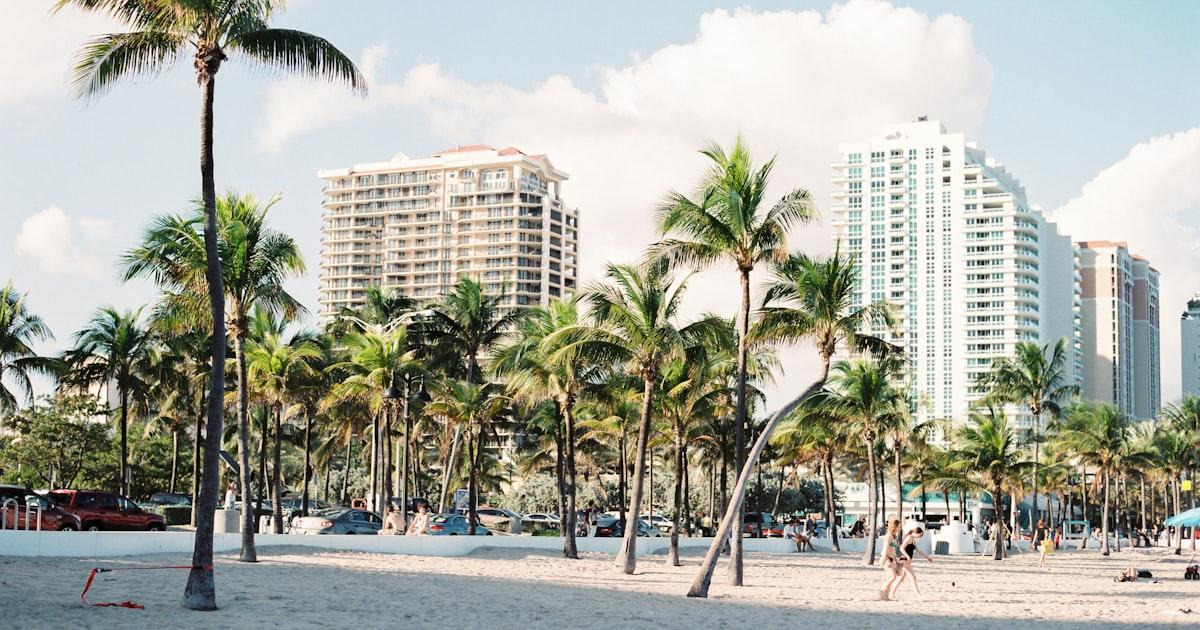
FIFA 2026 Airbnb Host Guide: Miami
Seven matches at Hard Rock Stadium, including a quarterfinal on July 11 and the Bronze Final on July 18. Brazil vs. Scotland drawing the single most-booked fan demand of the entire tournament. Portugal, Colombia, Uruguay. And a zoning-based STR regulatory environment complex enough that two condos in the same tower can be legal and illegal, respectively. Here's what Miami hosts actually need to know.
Miami is one of the standout FIFA 2026 host markets. International demand is concentrated here in a way that no other U.S. host city can match — Miami draws four of the top 10 most-booked matches in the entire tournament on AirDNA's booking-pacing data, and Deloitte projects roughly $5,000 per host in tournament earnings across the metro. The catch is that Miami also carries the most complex multi-jurisdictional STR regulatory environment of any U.S. host city, with fines starting at $20,000 for a first unlicensed violation on the Miami Beach side.
This guide walks through the Hard Rock schedule, the four licensing layers, the pricing picture, the Brightline transit story, the Bayfront Park Fan Festival, neighborhoods (including the Fort Lauderdale option), and what to put in your guidebook. For the broader strategy across the tournament, see the main host guide.
The Match Schedule: Seven Matches, Four Heavyweight Fan Bases
Hard Rock Stadium hosts seven FIFA 2026 matches across the group stage and three knockout rounds — a quarterfinal on July 11 and the Bronze Final on July 18. The match dates that should anchor your calendar:
- June 15 — Saudi Arabia vs. Uruguay, group stage.
- June 21 — Uruguay vs. Cabo Verde, group stage.
- June 24 — Brazil vs. Scotland, group stage.
- June 27 — Colombia vs. Portugal, final group stage match at Hard Rock.
- July 3 — Round of 32 knockout match.
- July 11 — Quarterfinal.
- July 18 — Bronze Final, third-place playoff.
Three things worth flagging:
- Brazil vs. Scotland on June 24 is the #1 most-booked match of the entire tournament. AirDNA tracking through February 17, 2026 had 12,614 bookings already locked in for that date — more than any other single match in any host city. Brazilian and Scottish fans are arriving early and staying long.
- Colombia vs. Portugal on June 27 is the #2 most-booked match. Two top-15 international fan bases playing in the same stadium produces the second-highest bookings concentration of the tournament. The fact that Hard Rock hosts both #1 and #2 most-booked matches is what drives the Deloitte projection.
- The Bronze Final on July 18 is the second-to-last match of the tournament. Even with a smaller-than-Final fan footprint, the Bronze Final pulls multi-night travel parties from both semifinalists who lost — which is why Miami's tournament window stretches into late July when most non-final cities have wound down.
Regulations: The Most Complex Multi-Jurisdictional STR Environment of Any U.S. Host City
Miami isn't hard to operate in. It's hard to figure out if you're allowed to operate. The regulatory environment for short-term rentals operates across four jurisdictions — the State of Florida, Miami-Dade County, the City of Miami, and the City of Miami Beach — each with its own licensing layer, and on top of those, condo and HOA covenants frequently restrict short-term rentals at the building level. Two condos in the same tower can have completely different legal answers.
State of Florida: DBPR Vacation Rental Dwelling License
The Florida Department of Business and Professional Regulation (DBPR) requires a Vacation Rental Dwelling License for any property rented for periods under 30 days more than three times per year. This is the statewide baseline that applies regardless of which Miami-area municipality the property is in. Renewable annually, required before listing.
Miami-Dade County: Certificate of Use + Business Tax Receipt
On top of the state license, Miami-Dade County requires two distinct documents:
- A Miami-Dade County Certificate of Use (CU), confirming the property is in a zoning category that permits short-term rental. Issued after a county-level review and tied to the property, not the host.
- A Miami-Dade County Business Tax Receipt (BTR), renewed annually October 1 to September 30. Required regardless of where in the county the property sits.
Miami-Dade can assess fines up to $20,000 per violation for unlicensed operation under the county ordinance.
City of Miami: Zoning-Specific Eligibility
The City of Miami applies its own zoning code (Miami 21) on top of the county requirements. Whether your property can legally be a short-term rental depends on the specific transect zone:
- T4, T5, T6, and CI-HD zones — short-term rentals are generally permitted under the city's Apartment Hotel / Condo Hotel framework.
- Single-family residential zones (T3) — short-term rentals generally not permitted; the low-density zones treat short-term rentals as a land-use that doesn't fit the residential character.
- In low-density and Estate zones, the responsible party must reside on-site for more than six months per year.
The practical implication: two units in the same building can have different zoning treatment depending on the unit type and tower classification, and the only reliable way to know your status is to pull the official Miami 21 zoning data for your specific address.
City of Miami Beach: The Strictest Rules in the Region
Miami Beach operates a separate and significantly stricter regime under Resiliency Code sections 7.5.4.11 and 7.5.4.13. The three rules to know:
- Prohibited in all single-family-home neighborhoods — the SF, SD-B, RM-1 and several other low-density zones ban short-term rentals entirely.
- Permitted in specific zoned districts — the South Beach Entertainment District, North Beach Town Center, RM-2, RM-3, and MXE zones allow short-term rentals with the right licenses.
- Required to hold a Miami Beach Business Tax Receipt AND a Miami Beach Resort Tax Certificate, on top of the county and state licenses. Miami Beach also operates its own Resort Tax that hosts must collect and remit monthly.
Penalties for unlicensed Miami Beach operation start at $20,000 for a first offense and scale to $100,000 for repeat violations. These are genuinely the highest STR fines in any U.S. host city on a per-violation basis. For Miami Beach specifically, hosts should verify zoning against the official Miami Beach STR map before doing anything else.
HOA and condo-building restrictions
Even with all four licenses in place, your condo declaration or HOA bylaws can prohibit short-term rentals. In Miami's high-rise-dominated market, this is the most common reason a properly-licensed unit cannot legally be listed. Pull the declaration of condominium and the HOA rules before purchasing any license — the licenses can be refunded; lost summer earnings cannot.
The hosts who win this market are the ones who verified eligibility before buying permits, not after — the zoning work must come first. For a side-by-side view of how Miami's framework compares with the other 15 host cities, see the city-by-city regulations guide.
The Pricing Opportunity: Top-Tier Per-Host Earnings With International Demand Concentration
Miami's pricing picture is shaped by the highest international fan concentration of any U.S. host city. The data points worth anchoring against. (Skip to the pricing calculator if you just want numbers.)
- Deloitte projection: approximately $5,000 per Miami-area host across the tournament window — top tier among U.S. host cities, driven by the international fan concentration.
- AirDNA match-level booking demand: Miami draws four of the top 10 most-booked matches in the tournament. Brazil vs. Scotland (June 24) and Colombia vs. Portugal (June 27) are #1 and #2 most-booked respectively.
- Miami-Fort Lauderdale pre-tournament pacing: AirDNA data through February 2026 shows a 159% year-over-year demand increase for tournament dates across the metro.
- Brickell luxury condo ADRs: Q1 2026 Brickell ADRs are pacing at $287/night with 68% occupancy — and that's before the tournament-window premiums layer on.
Pricing by match phase
- Brazil vs. Scotland (June 24) and Colombia vs. Portugal (June 27): The single highest-pricing-power group stage nights of the entire tournament for any U.S. host city. Treat them as their own pricing tier above the rest of group stage.
- Saudi Arabia vs. Uruguay (June 15) and Uruguay vs. Cabo Verde (June 21): Solid group stage rates — 30–50% above your normal summer baseline — with Uruguayan fan demand concentrating on these two nights.
- Round of 32 (July 3): Add 20–30% on top of group stage rates. Knockout demand pulls multi-night travel parties.
- Quarterfinal (July 11): Top knockout pricing tier. Fans flying in for a quarterfinal have already committed to the trip; demand is price-inelastic.
- Bronze Final (July 18): A separate pricing window. Travel parties from the losing semifinalists drive demand. ADRs hold above mid-July norms even though the match isn't the Final itself.
Properties within walking distance of Brightline stations or with easy Brickell/MIA access can command a 15–25% premium over comparable inventory further from transit.
Try the FIFA 2026 Pricing Calculator →
Enter your base summer rate and host city. The calculator applies the match-phase multipliers above and returns a proposed nightly price for every day in June and July 2026.
For the full tournament-wide pricing framework, see the FIFA 2026 pricing guide.
Getting Guests to Hard Rock Stadium: The Brightline Solution
Hard Rock Stadium is in Miami Gardens, roughly 15–16 miles north of downtown Miami. The transit story for Miami is, unusually for a U.S. host city, a good one — because Brightline built dedicated Hard Rock Stadium service. The six options for getting your guests there:
Brightline + End Zone Express shuttle. The cleanest path: Brightline trains run from MiamiCentral (downtown Miami), Aventura, Fort Lauderdale, Boca Raton, or West Palm Beach directly to Brightline Aventura Station, where a complimentary End Zone Express shuttle departs roughly 10 minutes after train arrival and runs guests to the stadium. Round-trip Brightline fares run $10–15 from Miami, $15–20 from Fort Lauderdale, and $25–35 from West Palm Beach. Trains sell out on match days — book ahead.
HRS Express Park & Ride. The GEICO-sponsored HRS Express service runs from Lot 70 in Fort Lauderdale and Lot 95 at Golden Glades in Miami, with $10 parking and shuttle service to the stadium. Best option for guests with cars who don't want to drive door-to-door.
Rideshare. Drop-offs happen outside the security perimeter, not at the stadium gates. Do not set your Uber drop-off to Hard Rock Stadium itself — the driver will be turned away. Use the designated rideshare zone published on the Hard Rock Stadium FIFA page. Typical pre-surge fare from downtown Miami runs $40–$60 pre-surge; expect to pay more and wait longer for the trip back.
Metrorail + Metrobus 297. Take Metrorail to Earlington Heights or Golden Glades Station and transfer to Metrobus Route 297, which runs directly to Hard Rock on match days. Cheaper than Brightline, slower, and a viable backup if Brightline is sold out.
Driving. Stadium parking is available but limited; expect 90+ minutes on match days from downtown Miami door-to-door, mostly because of post-match traffic. For local guests with cars, this option works; for international guests, push them onto Brightline.
Heat and tropical showers. Miami in June/July runs hot, humid, and prone to afternoon thunderstorms. Hard Rock has a stadium canopy that covers roughly 90% of seating, but the walks from Brightline and the rideshare zone are not covered. Hydration and rain prep matter.
For hosts, the transit reality is strategic: the listings that get rebooked are the ones whose owners wrote a clear "take Brightline from Brightline Aventura Station or MiamiCentral Station" instruction before the guest arrived. Generic transit guidance doesn't work; specific does.
The FIFA Fan Festival at Bayfront Park
The official Miami FIFA Fan Festival runs for 23 consecutive days at Bayfront Park in downtown Miami — one of the longest Fan Fest activations of any U.S. host city. Live broadcasts of all 104 tournament matches, food and beverage vendors, and Miami-specific cultural programming between matches. Free entry with online registration.
The Fan Festival is the single best answer for guests who don't have match tickets. It's also a useful draw for guests staying in Brickell, Downtown, Edgewater, and Wynwood — these neighborhoods are within walking or short-rideshare distance of Bayfront Park, which adds a real non-match-day experience to a Miami stay.
Best Neighborhoods for Hosts
Brickell. The strongest combination of international-fan appeal, Brightline access from MiamiCentral, walkable nightlife, and pricing power. Brickell's luxury condo stock pulls premium ADRs even before tournament-window premiums layer on; verify your specific tower's HOA rules first.
Edgewater and Wynwood. Walkable to Bayfront Park, strong neighborhood character, and a more accessible price point than Brickell. Wynwood's art and food scene is a genuine draw for international fans.
Downtown Miami. MiamiCentral Station is the Brightline hub for Hard Rock service, and Downtown hotels and condos sit within walking distance. The default answer for guests who prioritize transit access over neighborhood character.
Aventura. Closest Brightline station to Hard Rock, which makes it the logical choice for match-focused fans. Quieter neighborhood character than Brickell or Wynwood, but the transit math is unbeatable for guests attending multiple matches.
Miami Beach (zone-eligible properties only). Beach access and South Beach entertainment density are real draws, but the regulatory layer is the strictest in the region. Only host here if your property is in one of the zoned districts (South Beach Entertainment District, North Beach Town Center, RM-2, RM-3, or MXE) and you have all four licenses including the Miami Beach BTR and Resort Tax Certificate.
Coral Gables, Coconut Grove, and Fort Lauderdale. These are the "outer" options that still work for FIFA 2026. Fort Lauderdale deserves special attention: Brightline runs directly from Fort Lauderdale to Aventura, which means a Fort Lauderdale stay is genuinely comparable on transit time to a Brickell stay for the specific purpose of getting to Hard Rock Stadium. ADRs in Fort Lauderdale undercut Miami proper, and the regulatory environment there is generally less complex than the Miami-Dade four-layer stack.
What to Put in Your Guidebook
Brightline to Hard Rock Stadium step-by-step. From your specific neighborhood, name the closest Brightline station, the train direction, the transfer at Aventura Station to the End Zone Express shuttle, and the roundtrip cost. Door-to-door time. International guests consistently underestimate U.S. transit complexity — write this down.
"Do not set your rideshare drop-off to Hard Rock Stadium." Drivers cannot drop at the stadium gates on match days. The drop-off is the designated zone outside the security perimeter. Tell your guests this explicitly so they don't end up arguing with their driver.
The Fan Festival at Bayfront Park. 23 consecutive days, free entry with registration, walkable from Brickell/Downtown/Edgewater/Wynwood. The best answer for guests without match tickets who still want the World Cup atmosphere.
Heat and rain prep. Hot, humid, and prone to afternoon thunderstorms. Sun protection, hydration, and a contingency plan for rain belong in the guidebook.
Local food recommendations matched to match nights. Group restaurants by walk distance from your property and by pre-match vs. post-match timing. International fans looking for dinner before a 9 PM kickoff want a 30-minute option, not a tasting menu.
Language context. Miami is the most Spanish-conversant of the U.S. host cities. A line in your guidebook noting that Spanish is widely spoken (and that Portuguese and Haitian Creole are common around specific neighborhoods) reassures international guests in a way that no other U.S. city can match.
MIA airport specifics. Miami International vs. Fort Lauderdale-Hollywood (FLL) is the airport choice that confuses international guests the most. Brief them on transit options from each, expected wait times, and the best time of day to arrive.
Airport Tip: Fly into FLL if you're staying North/Aventura; use MIA only if you're staying in Brickell/Downtown.
Shuttle Rule: You must have a match ticket to board the free shuttle from Brightline Aventura to the stadium. This is a genuine access restriction that regularly catches international fans by surprise — write it down so your guests don't arrive at the shuttle and get turned away.
Brightline Booking: Book "Hard Rock Stadium Connect" trains in the app (look for the soccer icon).
Universal power adapters. Provide one. U.S. outlets are first-hour friction for international guests, and a $15 multi-region adapter prevents your first guest message from being a request to find one.
For a deeper look at preparing the rest of your listing for international guests, see the international guest prep guide.
Minimum Stays and Cancellation
For Miami specifically: the Brazil/Scotland and Colombia/Portugal nights pull multi-day travel parties that often book a week or more, so a 4–6 night minimum works well across the late-June cluster. The quarterfinal week (around July 11) is a 4–7 night minimum window. The Bronze Final on July 18 has its own demand shape — losing-semifinalist travel parties will book specifically around that date.
Moderate cancellation policies convert more international early bookings than strict ones. For a full breakdown, see the minimum stay strategy guide for FIFA 2026.
Action Checklist for Miami Hosts
- Verify your property's zoning before anything else. Pull the official zoning data for your specific address. Verify whether short-term rentals are permitted in your Miami 21 transect zone, your Miami Beach zoning category, and your specific condo declaration. The rest of the checklist is moot if the zoning blocks you — Miami Beach fines start at $20,000.
- Secure all four licensing layers. DBPR Vacation Rental Dwelling License, Miami-Dade County Certificate of Use, Miami-Dade County Business Tax Receipt, and (if applicable) Miami Beach Business Tax Receipt + Resort Tax Certificate. Plan license processing time before listing.
- Check your condo declaration and HOA bylaws. Many high-rise buildings prohibit short-term rentals regardless of zoning. The license can be refunded; lost summer earnings cannot.
- Register to collect Miami-Dade tourist development tax and resort taxes. Some platforms collect a portion automatically; verify your specific platform's handling and file the rest with the county and (for Miami Beach) the city.
- Price dynamically by match phase. Brazil vs. Scotland and Colombia vs. Portugal are the group-stage peaks; the quarterfinal and Bronze Final each warrant their own pricing tier.
- Configure minimum stays. 4–6 nights for the late-June cluster, 4–7 for the quarterfinal and Bronze Final windows.
- Build your guidebook around Brightline. The Brightline + End Zone Express shuttle is the cleanest transit path in any U.S. host city. Write it into the pre-stay communication, the welcome message, and the in-property guidebook.
- Explicitly note the "no Hard Rock Stadium rideshare drop-off" rule. Drivers cannot drop at the gates on match days. Tell your guests this in writing before they arrive.
- Consider Fort Lauderdale as an alternative. For investor hosts with portfolio flexibility, Fort Lauderdale's transit time to Hard Rock via Brightline is competitive with Miami, and the regulatory stack is simpler.
- Offer moderate cancellation policies. International early-bookers convert better on moderate terms than strict ones; the late-booking, late-tournament guests will accept stricter terms anyway.
- Start your post-tournament retention strategy now. Miami's international fan concentration makes the post-tournament referral pool more valuable here than in most U.S. host cities — see the post-FIFA guest retention guide for the playbook.

Disclaimer: This article is for informational purposes only and does not constitute legal, tax, or financial advice. Miami's short-term rental regulations operate across four jurisdictions — state, county, City of Miami, and City of Miami Beach — each with distinct zoning and licensing requirements. Penalties for non-compliance are among the highest in the country. Verify current requirements with the Florida DBPR, Miami-Dade County, your specific municipality, and your condo or HOA before listing.
Part of our FIFA 2026 hosting series.
Sources: FIFA World Cup 2026 official match schedule; FIFA World Cup 2026 Miami Host Committee; Hard Rock Stadium; Florida Department of Business and Professional Regulation (DBPR); Miami-Dade County short-term vacation rental ordinance; City of Miami Miami 21 zoning code and Apartment Hotel/Condo Hotel framework; City of Miami Beach Resiliency Code 7.5.4.11 and 7.5.4.13; Miami Beach Business Tax Receipt and Resort Tax Certificate requirements; Brightline Hard Rock Stadium Connect service; Miami-Dade Transit Metrorail and Metrobus Route 297; GEICO HRS Express Park & Ride; Deloitte/Airbnb FIFA 2026 host earnings projections; AirDNA Miami-Fort Lauderdale market data and match-level booking tracking (through February 2026); CBS Miami, NBC Miami, Miami Herald, Time Out Miami, Miami Gardens World Cup guides (regulatory, pricing, and transit coverage).
Last updated on